DRFT Labs Home

Category

Research & Development

9 articles

Institutional Memory in Metal and Silicon: How Hardware Companies Are Turning Prototype Graveyards Into Strategic Assets

Institutional Memory in Metal and Silicon: How Hardware Companies Are Turning Prototype Graveyards Into Strategic Assets

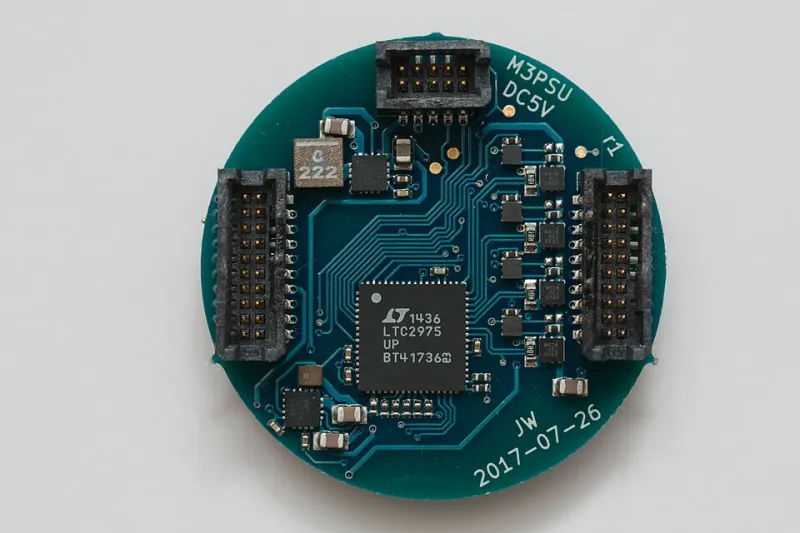
Across Silicon Valley and beyond, a quiet revolution in failure documentation is reshaping how hardware companies accumulate institutional knowledge. Rather than discarding abandoned circuit boards and defunct mechanical iterations, leading firms are building systematic archives of what did not work—and discovering that these records may be as competitively valuable as any successful product launch.
Physics First: Why the Next Generation of Scientific AI Is Being Built Around Laws, Not Just Data

Physics First: Why the Next Generation of Scientific AI Is Being Built Around Laws, Not Just Data

A new class of artificial intelligence systems is challenging the dominant data-first paradigm by embedding physical laws directly into model architecture. These physics-informed approaches are producing results in materials science, drug discovery, and battery development that purely statistical models have repeatedly failed to achieve—and the laboratories pioneering this integration are beginning to redefine what computational science can reliably deliver.

Open Notebooks, Verified Records: How the Research Community Is Engineering Its Way Out of the Reproducibility Crisis

Open Notebooks, Verified Records: How the Research Community Is Engineering Its Way Out of the Reproducibility Crisis

The scientific community's reproducibility problem is not fundamentally a credibility crisis—it is an information architecture crisis. A new generation of research institutions is responding by building machine-readable experimental infrastructure that makes every methodological choice traceable, auditable, and verifiable. The result is attracting serious investment and reshaping how laboratories operate from the ground up.

Beyond the Medical Ward: How Next-Generation Brain-Computer Interfaces Are Targeting the Able-Bodied World

Brain-computer interface research has earned its public profile through genuine medical achievement — restoring communication to locked-in patients, enabling motor control for individuals with paralysis. But across dozens of laboratories in academia and the private sector, a quieter and more expansive research agenda is taking shape. The next generation of neural interface applications is targeting cognitive augmentation, sensory restoration, and human-machine collaboration in industrial environ

Dead Ends, Live Data: How Forward-Thinking Labs Are Mining Their Own Failures for Future Wins

Dead Ends, Live Data: How Forward-Thinking Labs Are Mining Their Own Failures for Future Wins

Across Silicon Valley and beyond, a quiet methodological revolution is underway: leading R&D organizations are treating abandoned prototypes and failed experiments not as liabilities to be buried, but as structured data assets worth preserving and studying. The emerging discipline of 'failure archaeology' challenges decades of institutional culture that incentivized concealment over candor. What these organizations are uncovering may prove as valuable as any successful product launch.

Silicon's Last Stand: The Materials Science Race to Outrun the Transistor's Physical Limits

Silicon's Last Stand: The Materials Science Race to Outrun the Transistor's Physical Limits

As semiconductor engineers push transistor dimensions toward the 1-nanometer threshold, the fundamental laws of physics are becoming adversaries rather than constraints. From gallium oxide to carbon nanotubes, laboratories across the United States are prototyping radical alternatives that may either extend Moore's Law or render it obsolete entirely.

Wreckage as Resource: How Systematic Failure Is Becoming a Competitive Advantage in Product Development

Wreckage as Resource: How Systematic Failure Is Becoming a Competitive Advantage in Product Development

The most instructive artifacts in any innovation lab are rarely the products that shipped. Across the technology sector, leading organizations are formalizing the study of abandoned prototypes and failed experiments—transforming what was once considered waste into structured intelligence. Understanding how to extract value from failure, rather than simply tolerate it, may define the next generation of product development strategy.

The Accelerated Lab: How Artificial Intelligence Is Collapsing the Timeline Between Hypothesis and Breakthrough

Across disciplines as varied as drug discovery, semiconductor design, and advanced materials engineering, artificial intelligence is fundamentally restructuring how research is conducted — compressing development cycles that once spanned years into processes measured in months or weeks. The implications for R&D investment, scientific workforce planning, and competitive strategy are profound, and the transformation is already well underway.